
Framing Security as a Civic System
Framing Security as a Civic System
Cittadella della Sicurezza
Cittadella della Sicurezza
Status:
Competition - Shortlisted
Year:
2025
Type:
Architecture, Urban Design
Size:
35.600 sqm
Client:
Agenzia del Demanio
Location:
Rimini, Italy

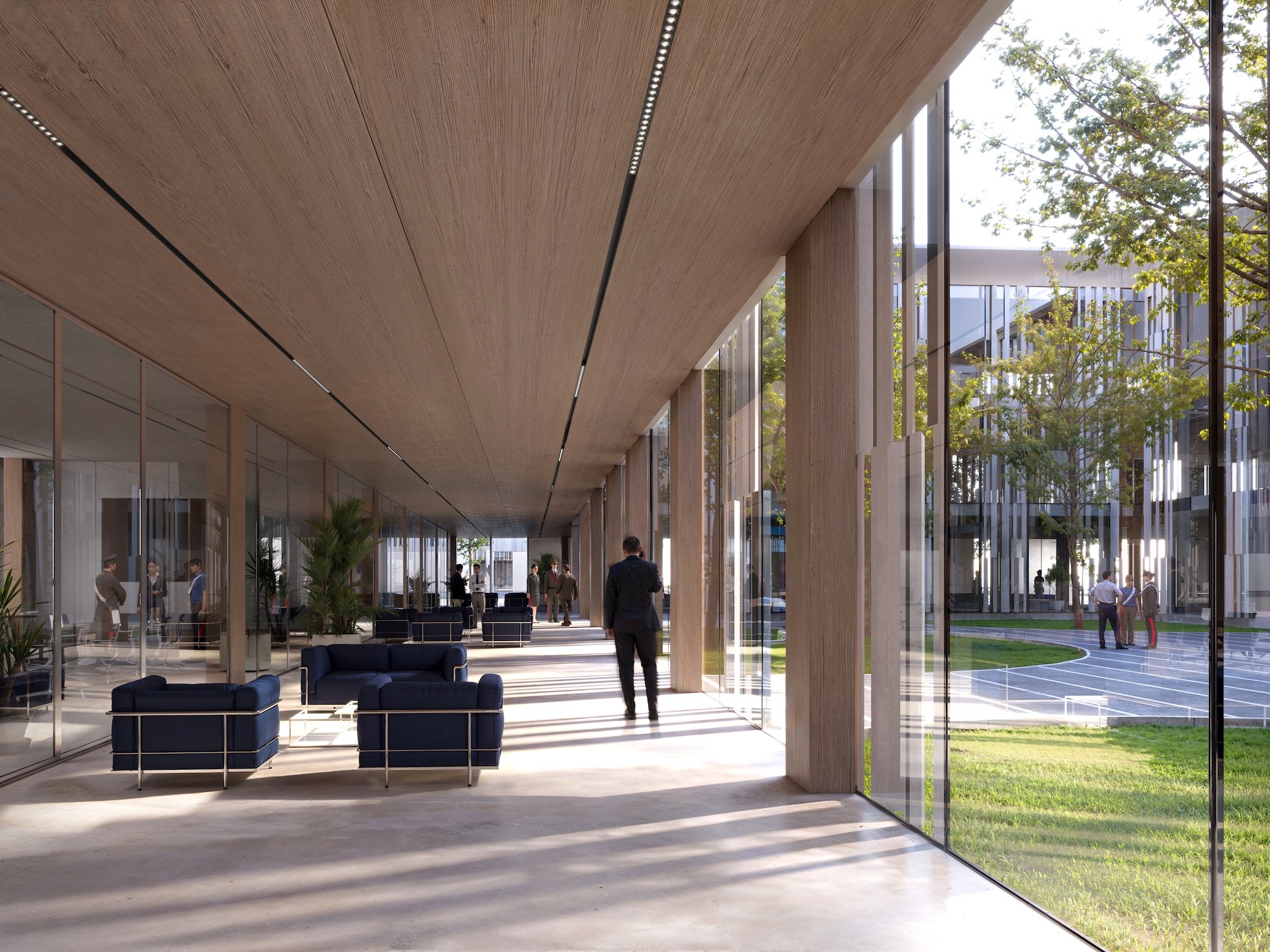

Security embedded in architecture
The project explores how highly controlled institutions can establish a more open relationship with the city without compromising their operational requirements.
Instead of relying on a continuous perimeter, security is distributed through the organization of buildings, thresholds, courtyards and circulation. Each institution retains its autonomy, while their architecture contributes to a shared civic identity. The result is a campus where protection is present but not imposed — embedded within spatial organization and urban form.


Landscape as connective infrastructure
At the centre of the Cittadella, landscape becomes the structure that reconnects a formerly closed site with Rimini. A continuous green-blue system brings together public space, pedestrian and cycling routes, existing vegetation and new ecological infrastructure.
Rather than surrounding the institutions as residual space, landscape organizes the relationship between buildings, people and city. It improves environmental performance while creating new possibilities for movement, encounter and everyday public life — turning an infrastructure of security into part of Rimini’s civic landscape.

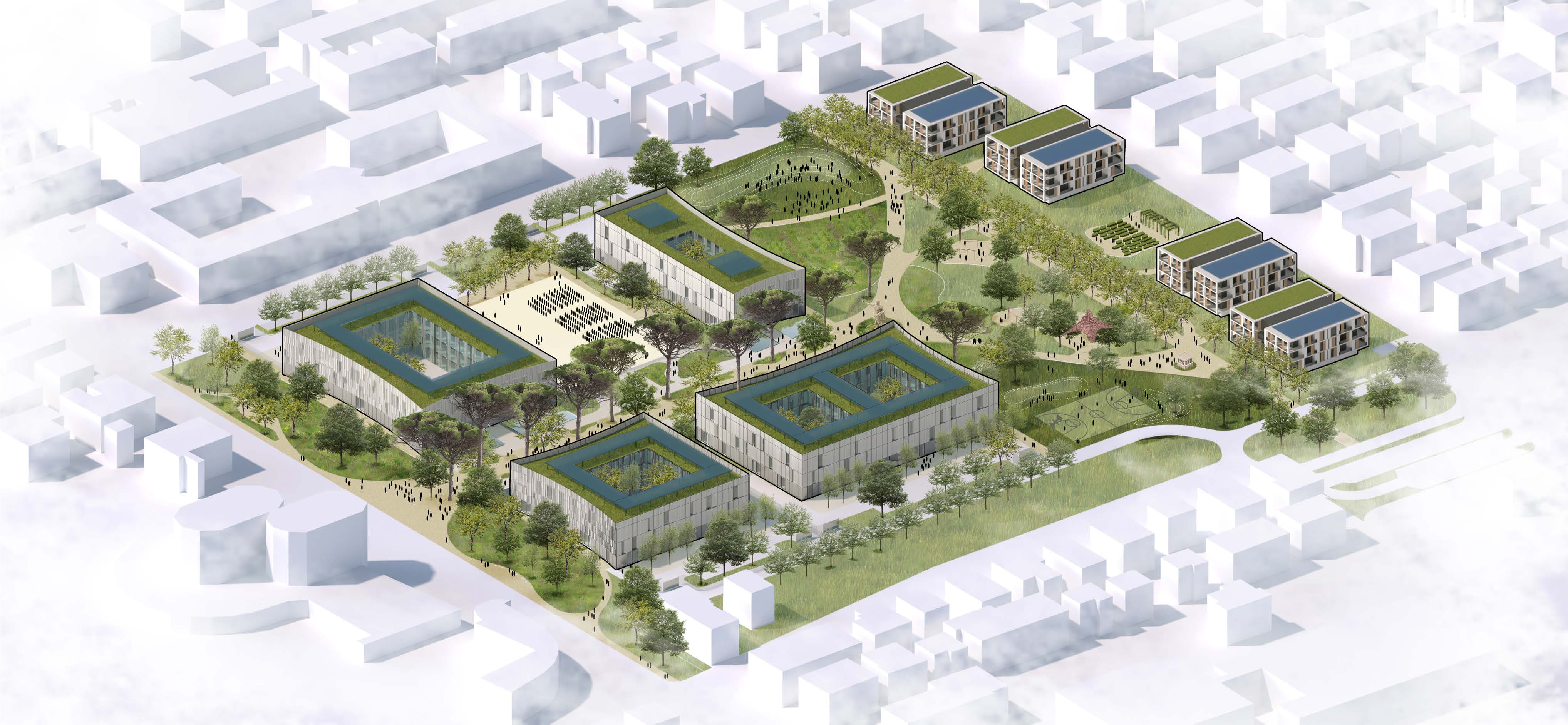
From a secured enclave to a civic system
The project transforms Rimini’s former military compound from an enclosed and inaccessible site into a new piece of city. Rather than treating security as a condition of separation, the Cittadella establishes a spatial framework in which institutional functions, public space and landscape can coexist.
Independent buildings accommodate the different security institutions while a new network of open spaces reconnects the site with its surroundings. Boundaries, access and circulation become part of the architecture itself, allowing different degrees of accessibility to operate within a coherent urban system.
Security embedded in architecture
The project explores how highly controlled institutions can establish a more open relationship with the city without compromising their operational requirements.
Instead of relying on a continuous perimeter, security is distributed through the organization of buildings, thresholds, courtyards and circulation. Each institution retains its autonomy, while their architecture contributes to a shared civic identity. The result is a campus where protection is present but not imposed — embedded within spatial organization and urban form.
Landscape as connective infrastructure
At the centre of the Cittadella, landscape becomes the structure that reconnects a formerly closed site with Rimini. A continuous green-blue system brings together public space, pedestrian and cycling routes, existing vegetation and new ecological infrastructure.
Rather than surrounding the institutions as residual space, landscape organizes the relationship between buildings, people and city. It improves environmental performance while creating new possibilities for movement, encounter and everyday public life — turning an infrastructure of security into part of Rimini’s civic landscape.
Architecture
OBLYK
Structures
GPA Partners
MEP
Studio Perillo
Sustainability
Arch. Valentini
Landscape
De Molfetta Strode
Images
Emme Works
More projects


