Italian Ministry of Environment and Energy Security
Italian Ministry of Environment and Energy Security
Italian Ministry of Environment and Energy Security
Rome
Rome
Rome
A manifesto for sustainable architetcure
A manifesto for sustainable architetcure
Overview
Overview
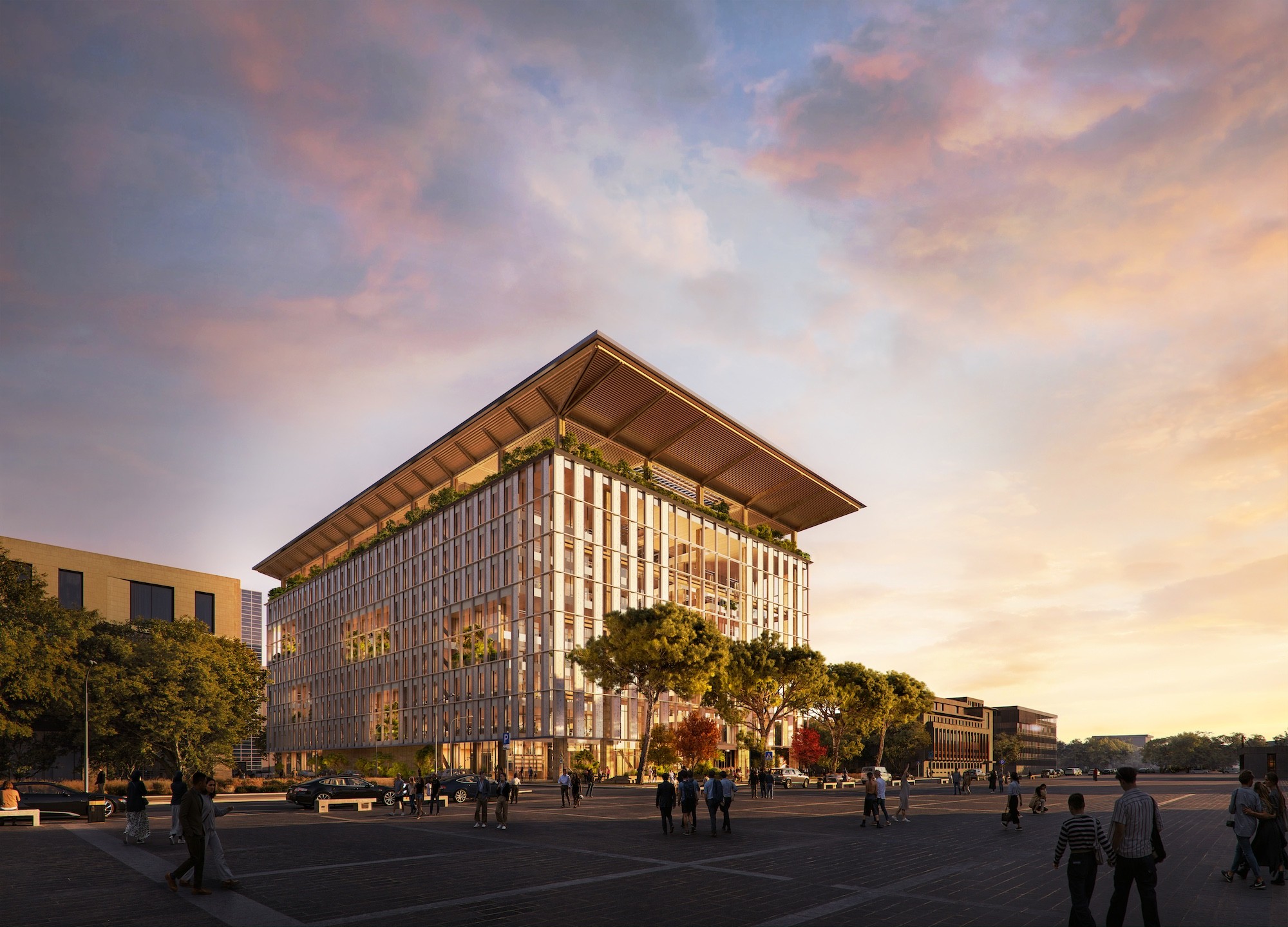
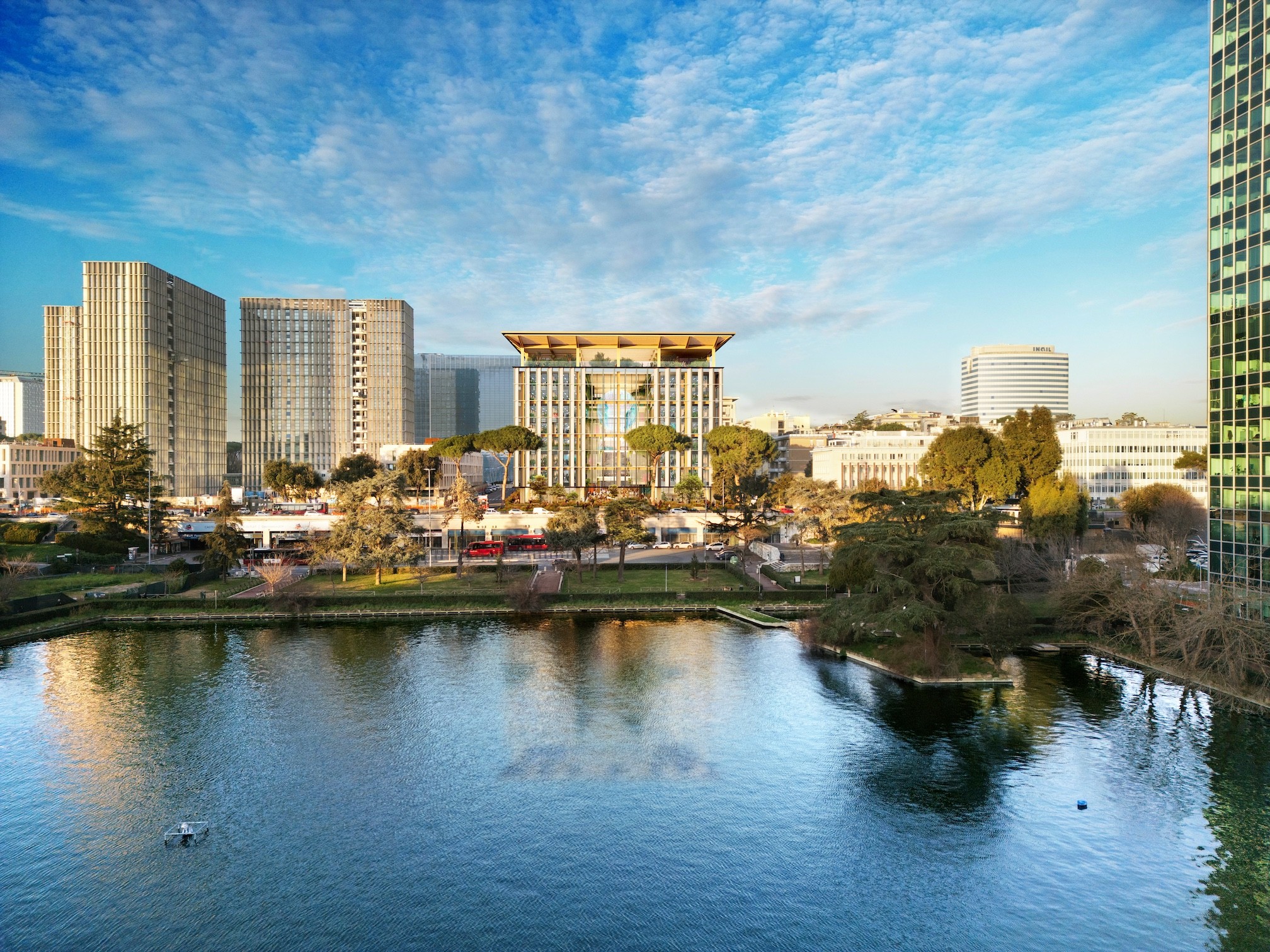
Nexus Terrae is the winning proposal for the new headquarters of Italy’s Ministry of Environment and Energy Security, set in the historic EUR district of Rome. The project is envisioned as a manifesto for sustainable design – a building that embodies Italy’s environmental ambitions through innovation, transparency, and adaptability. Conceived as an energy-positive and circular building, the new MASE headquarters will become both a high-performance workplace and a civic landmark, setting the benchmark for the coming government institution.
Nexus Terrae is the winning proposal for the new headquarters of Italy’s Ministry of Environment and Energy Security, set in the historic EUR district of Rome. The project is envisioned as a manifesto for sustainable design – a building that embodies Italy’s environmental ambitions through innovation, transparency, and adaptability. Conceived as an energy-positive and circular building, the new MASE headquarters will become both a high-performance workplace and a civic landmark, setting the benchmark for the coming government institution.
Key information
Key information
Client
Client
Agenzia del Demanio
Agenzia del Demanio
Year
Year
2025-present
2025-present
Location
Location
Rome, Italy
Rome, Italy
Typology
Typology
Government offices
Government offices
Size
Size
30,000 sqm
30,000 sqm
Services
Services
Architecture, Urban Design
Architecture, Urban Design
Partners
Partners
PLP Architecture, GPA, Studio Perillo, arch. A. Valentini, Enser
PLP Architecture, GPA, Studio Perillo, arch. A. Valentini, Enser
Status
Status
In Design - 1st Place International competition
In Design - 1st Place International competition
Insights
Nexus Terrae will set a benchmark for Italian institutional buildings
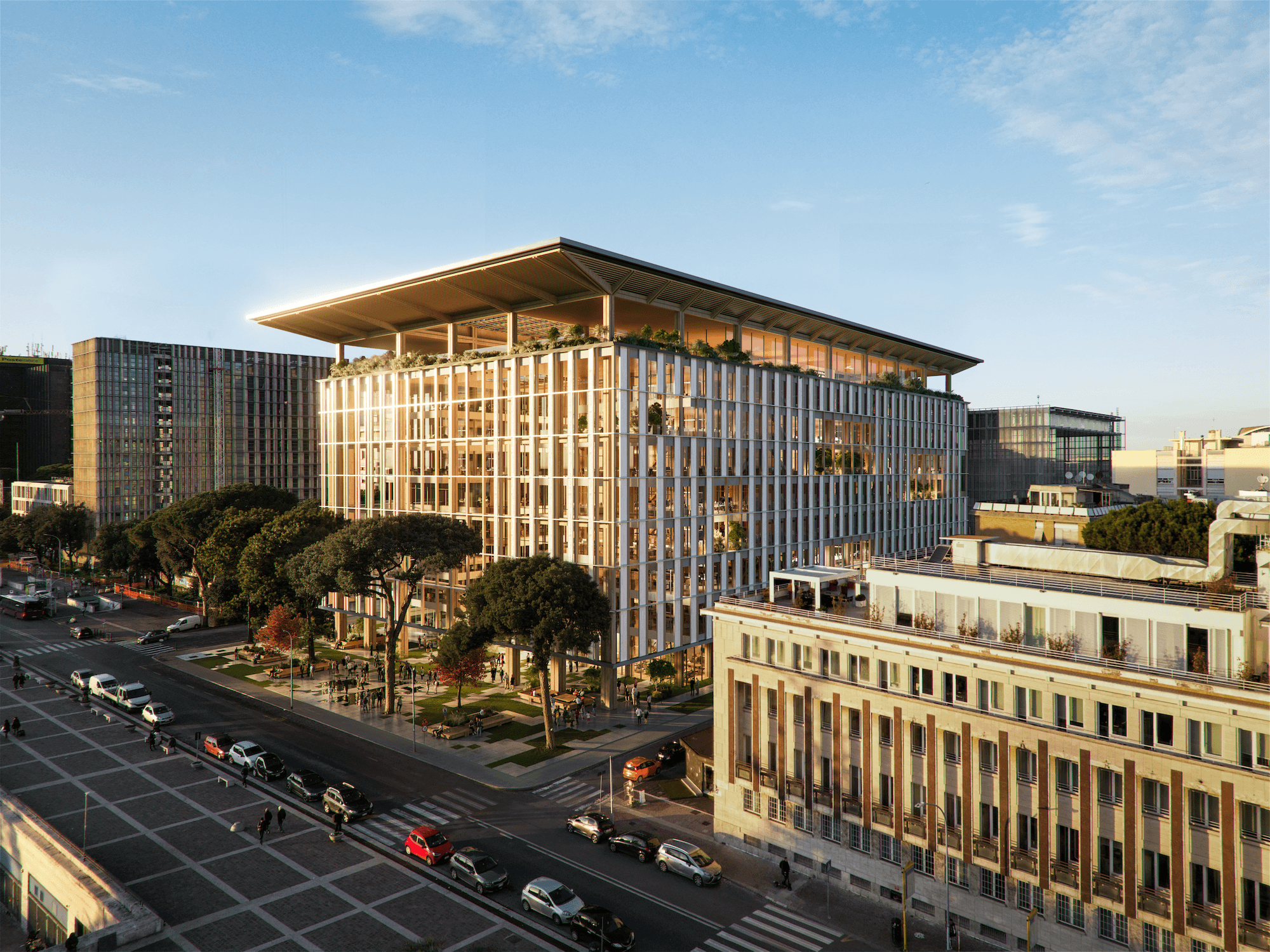
Integrating seamlessly into EUR’s orthogonal plan and monumental scale, the design organizes approximately 30,000m² across two timber-framed volumes in cross-laminated larch (X-LAM), reinterpreting the district’s rational grid through the lens of sustainable architecture and contemporary environmental design.
Nexus Terrae will set a benchmark for Italian institutional buildings
Integrating seamlessly into EUR’s orthogonal plan and monumental scale, the design organizes approximately 30,000m² across two timber-framed volumes in cross-laminated larch (X-LAM), reinterpreting the district’s rational grid through the lens of sustainable architecture and contemporary environmental design.
Description
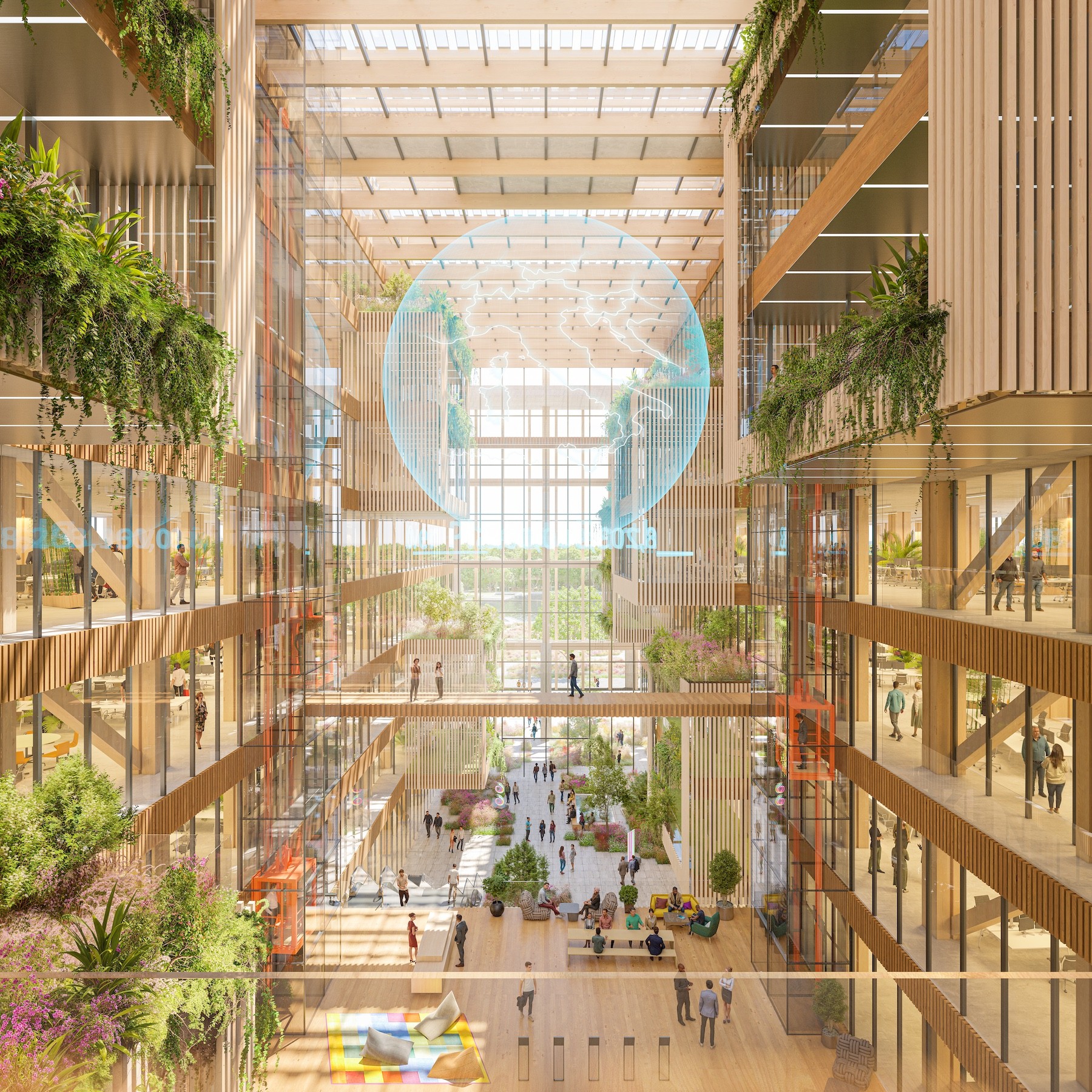
At the heart of the project, a vertical atrium rises through the building, filled with daylight and vegetation. Within it, a series of floating boxes create suspended terraces and concentrated workspaces, offering moments of retreat and reflection while maintaining visual continuity across all levels.
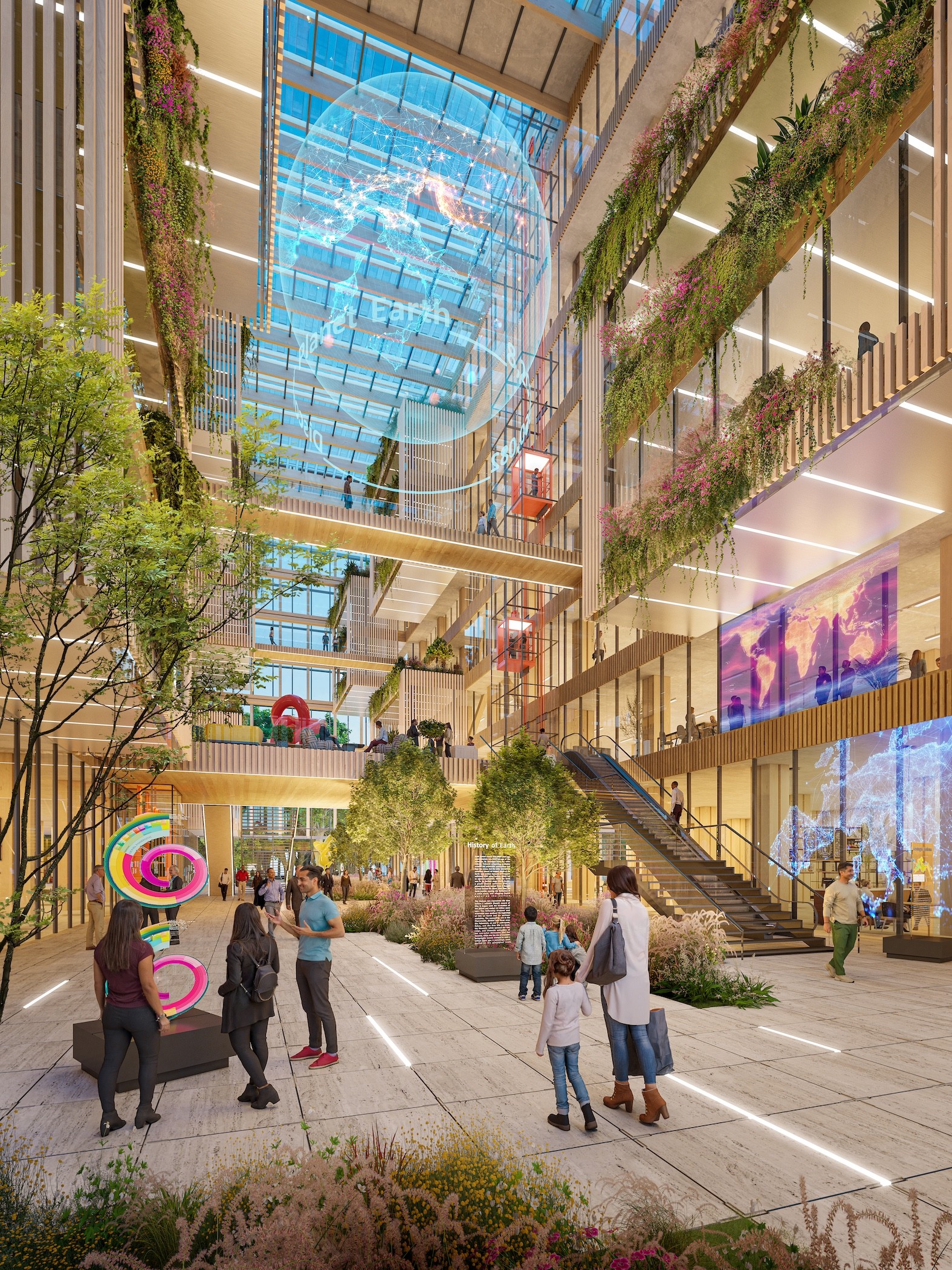
The ground floor, fully open to the public, extends the landscape inward – bringing greenery deep into the building to create an immersive biophilic environment for visitors and daily users. Spaces for exhibitions, dialogue, and collaboration unfold within this vibrant setting, transforming the arrival sequence into an experience of nature, light, and civic connection.
The façade unfolds as a refined composition of glass and travertine, expressing the dialogue between tradition and innovation. In daylight, it conveys solidity and permanence; at night, it becomes a softly glowing beacon, animating Viale America with a sense of civic openness.
At the heart of the project, a vertical atrium rises through the building, filled with daylight and vegetation. Within it, a series of floating boxes create suspended terraces and concentrated workspaces, offering moments of retreat and reflection while maintaining visual continuity across all levels.
The ground floor, fully open to the public, extends the landscape inward – bringing greenery deep into the building to create an immersive biophilic environment for visitors and daily users. Spaces for exhibitions, dialogue, and collaboration unfold within this vibrant setting, transforming the arrival sequence into an experience of nature, light, and civic connection.
The façade unfolds as a refined composition of glass and travertine, expressing the dialogue between tradition and innovation. In daylight, it conveys solidity and permanence; at night, it becomes a softly glowing beacon, animating Viale America with a sense of civic openness.
Next Projects

Let's Design Together
Let's Design
Together