Cittadella della Sicurezza
Cittadella della Sicurezza
Cittadella della Sicurezza
Rimini
Rimini
Rimini

A new model for citizen-centered urban regeneration
A new model for citizen-centered urban regeneration
Overview
Overview
The Cittadella della Sicurezza project represents a significant opportunity for urban regeneration for the city of Rimini, combining historical memory, architectural quality, and environmental sustainability. A new safe, attractive, and connected civic hub that brings public life back to an area currently closed to citizens. An ambitious project that, thanks to a strategic and multidisciplinary approach, responds to the contemporary challenges of security, the environment, and well-being, enhancing the urban and social context in which it is located.
The Cittadella della Sicurezza project represents a significant opportunity for urban regeneration for the city of Rimini, combining historical memory, architectural quality, and environmental sustainability. A new safe, attractive, and connected civic hub that brings public life back to an area currently closed to citizens. An ambitious project that, thanks to a strategic and multidisciplinary approach, responds to the contemporary challenges of security, the environment, and well-being, enhancing the urban and social context in which it is located.
Key information
Key information
Client
Client
Agenzia del Demanio
Agenzia del Demanio
Year
Year
2025
2025
Location
Location
Rimini, Italy
Rimini, Italy
Typology
Typology
Public, Residential
Public, Residential
Size
Size
30,000 sqm
30,000 sqm
Services
Services
Architecture, Urban Design
Architecture, Urban Design
Partners
Partners
GPA, De Molfetta Strode, Studio Perillo, FlAi, StudioLabo, Stefano Zenoni, Andrea Valentini
GPA, De Molfetta Strode, Studio Perillo, FlAi, StudioLabo, Stefano Zenoni, Andrea Valentini
Status
Status
International competition - 2nd place
International competition - 2nd place


Insights
An attractive, inclusive, and vibrant urban ecosystem
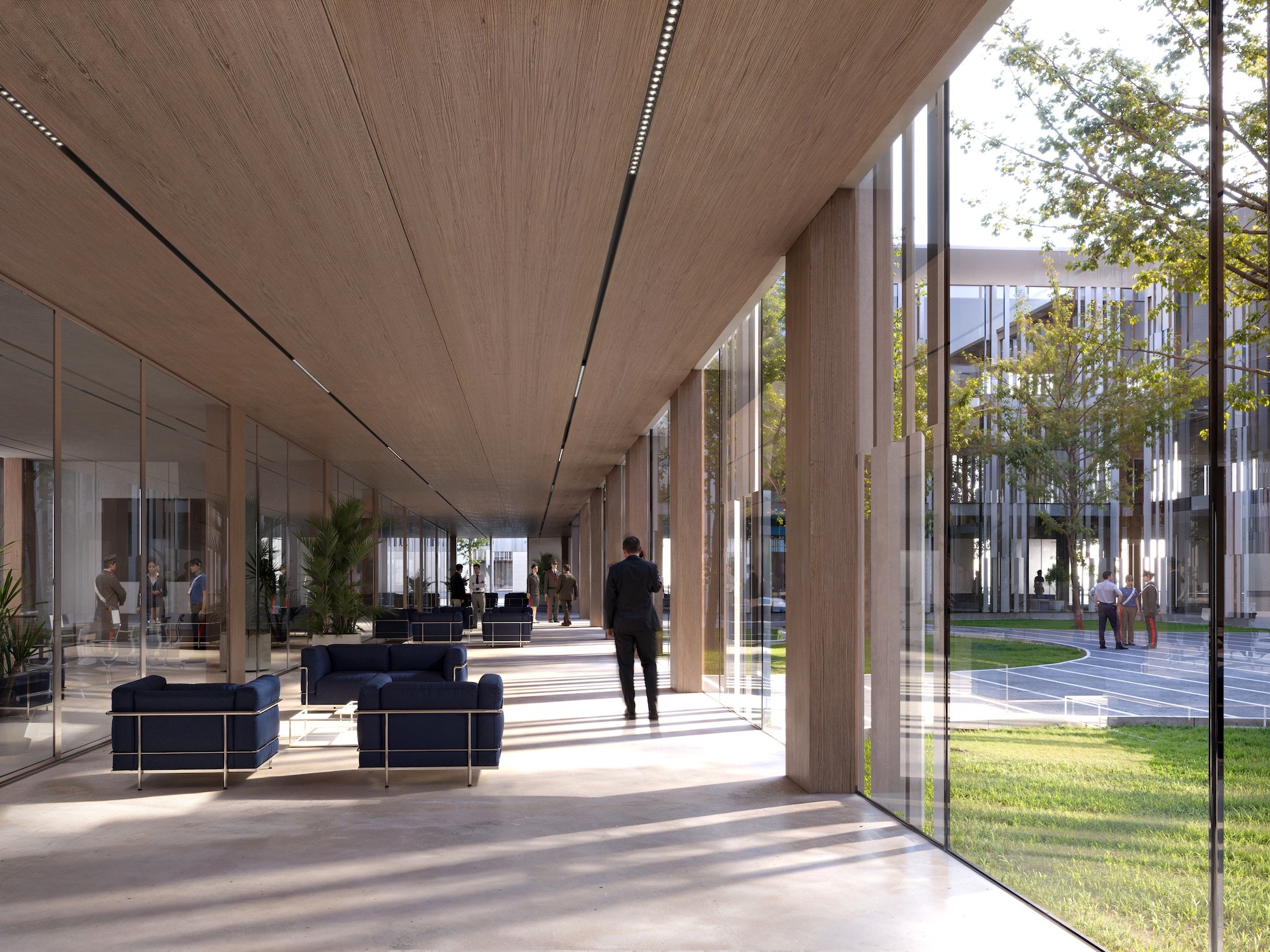
The project reinterprets the morphologies, colors, and materials of the natural landscape and integrates harmonically with the morphological characteristics of the existing urban neighborhood. The project places particular attention on the quality of public spaces and landscape, designed to promote inclusivity, accessibility, and environmental sustainability. Green spaces become tools for urban reactivation, welcoming residents, visitors, and workers into a welcoming and integrated environment. The landscape of the Citadel is conceived as indigenous, resilient, and multifunctional, capable of restoring a strong and recognizable identity to the entire neighborhood, contributing to its cultural, economic, and social regeneration.
An attractive, inclusive, and vibrant urban ecosystem
The project reinterprets the morphologies, colors, and materials of the natural landscape and integrates harmonically with the morphological characteristics of the existing urban neighborhood. The project places particular attention on the quality of public spaces and landscape, designed to promote inclusivity, accessibility, and environmental sustainability. Green spaces become tools for urban reactivation, welcoming residents, visitors, and workers into a welcoming and integrated environment. The landscape of the Citadel is conceived as indigenous, resilient, and multifunctional, capable of restoring a strong and recognizable identity to the entire neighborhood, contributing to its cultural, economic, and social regeneration.

Description
At the heart of the project, a vertical atrium rises through the building, filled with daylight and vegetation. Within it, a series of floating boxes create suspended terraces and concentrated workspaces, offering moments of retreat and reflection while maintaining visual continuity across all levels.
The ground floor, fully open to the public, extends the landscape inward – bringing greenery deep into the building to create an immersive biophilic environment for visitors and daily users. Spaces for exhibitions, dialogue, and collaboration unfold within this vibrant setting, transforming the arrival sequence into an experience of nature, light, and civic connection.
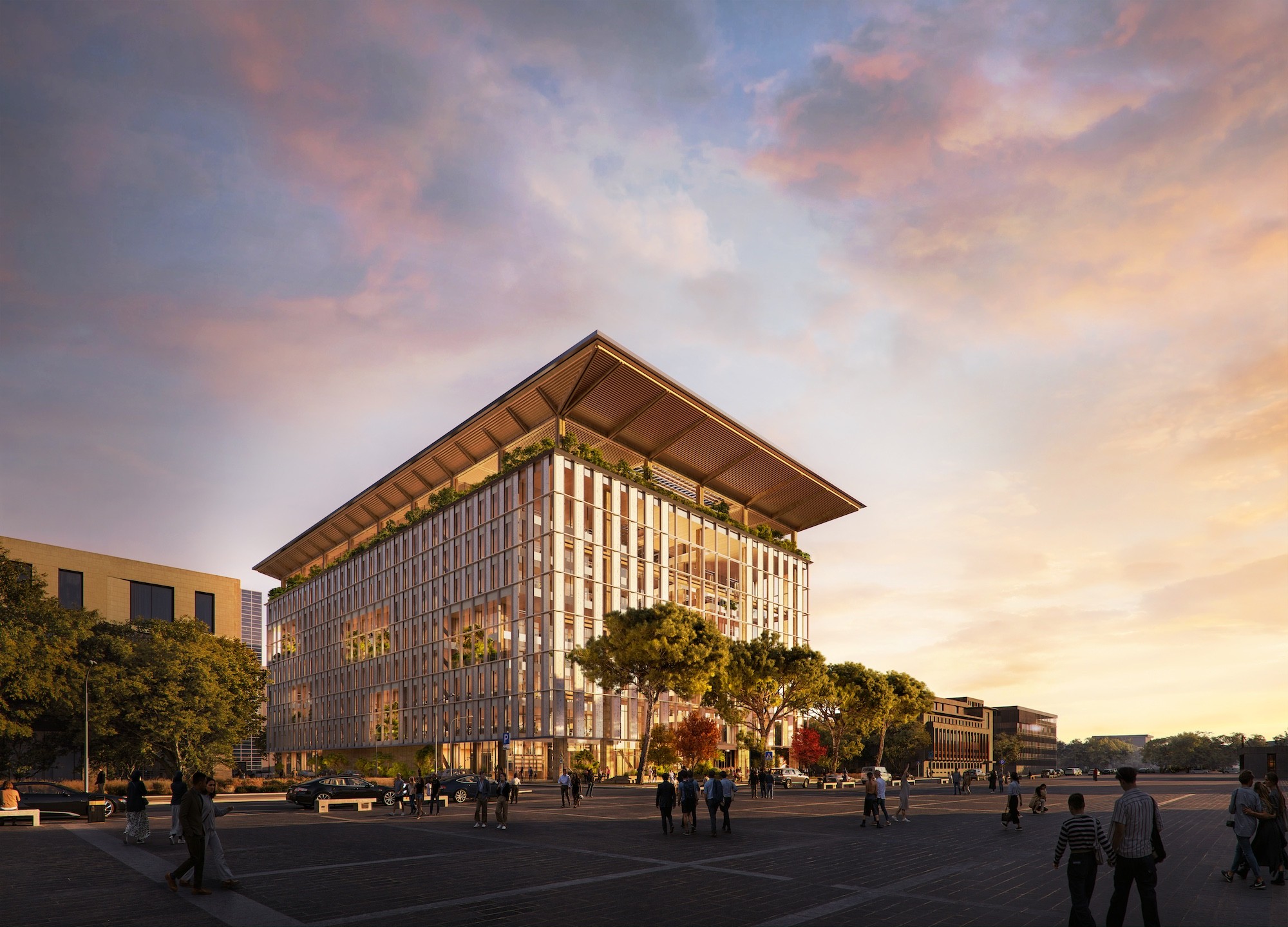
The façade unfolds as a refined composition of glass and travertine, expressing the dialogue between tradition and innovation. In daylight, it conveys solidity and permanence; at night, it becomes a softly glowing beacon, animating Viale America with a sense of civic openness.
At the heart of the project, a vertical atrium rises through the building, filled with daylight and vegetation. Within it, a series of floating boxes create suspended terraces and concentrated workspaces, offering moments of retreat and reflection while maintaining visual continuity across all levels.
The ground floor, fully open to the public, extends the landscape inward – bringing greenery deep into the building to create an immersive biophilic environment for visitors and daily users. Spaces for exhibitions, dialogue, and collaboration unfold within this vibrant setting, transforming the arrival sequence into an experience of nature, light, and civic connection.
The façade unfolds as a refined composition of glass and travertine, expressing the dialogue between tradition and innovation. In daylight, it conveys solidity and permanence; at night, it becomes a softly glowing beacon, animating Viale America with a sense of civic openness.

Next Projects
Let's Design Together
Let's Design
Together