UniBg Open Campus
UniBg Open Campus
UniBg Open Campus
Bergamo
Bergamo
Bergamo
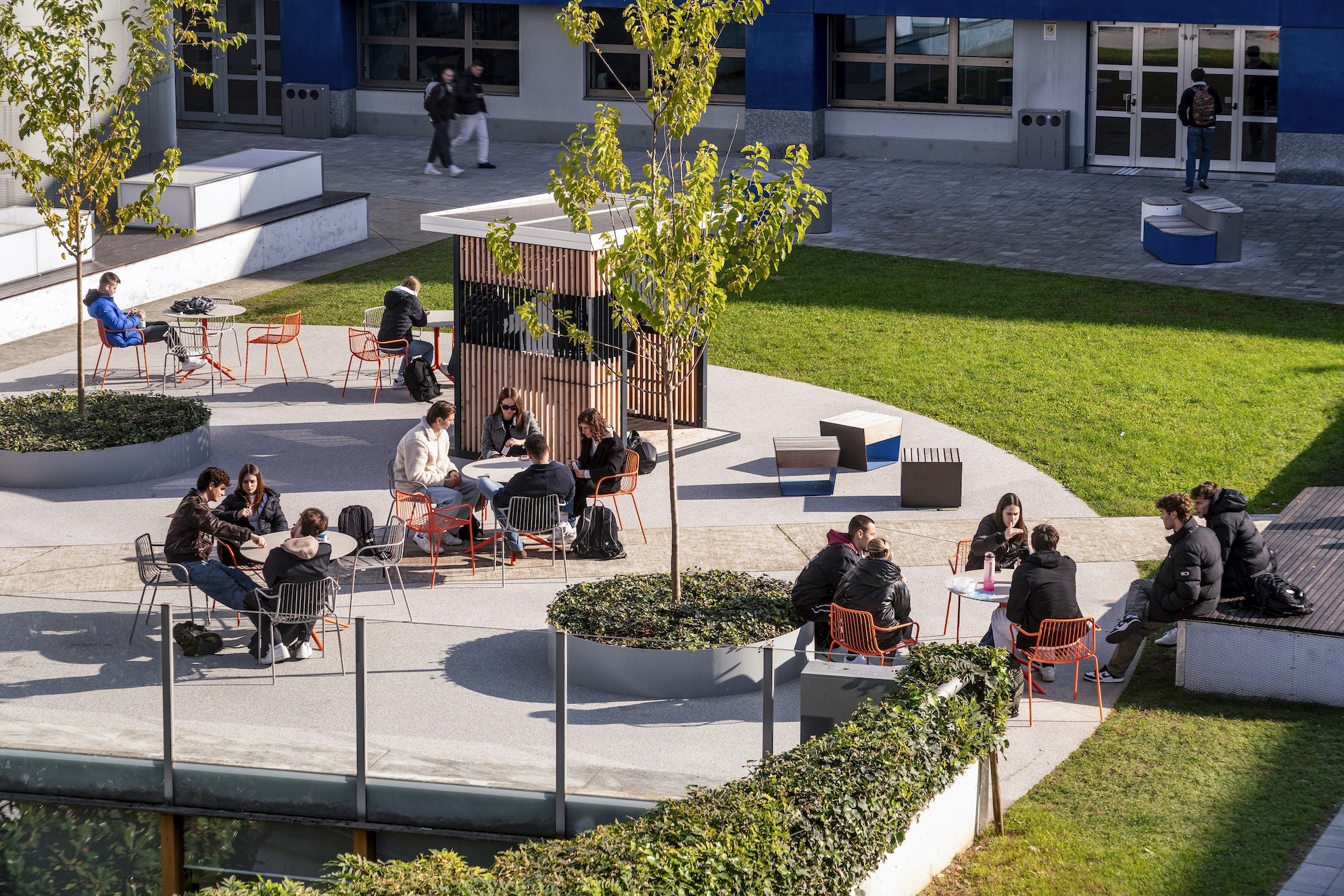
Attractive and engaging spaces across the University campus
Attractive and engaging spaces across the University campus
Overview
Overview
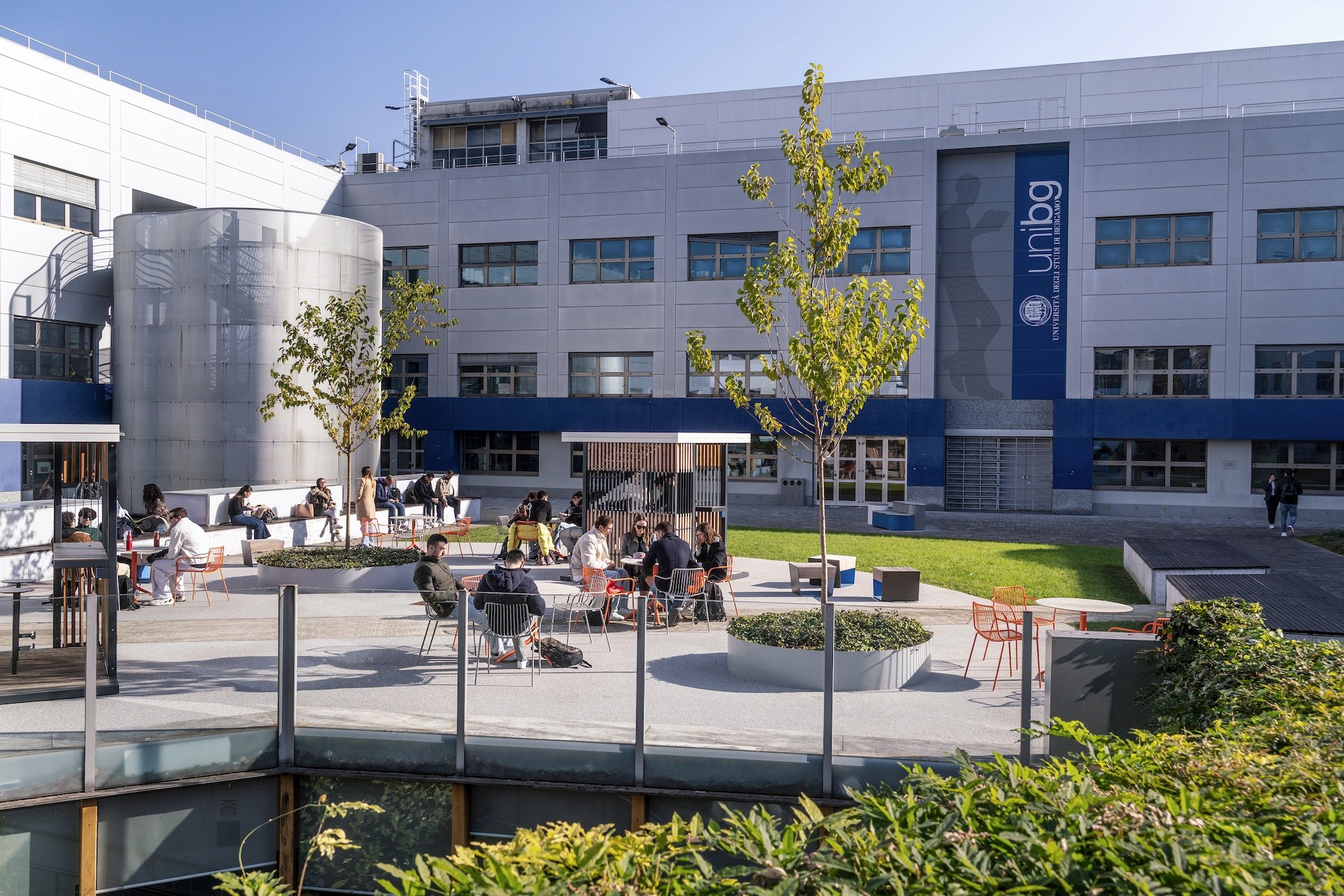
The Open Campus project was born from the idea of creating open and attractive meeting places, connected to each other and integrated into the urban fabric of Bergamo. Poles of knowledge that are rethought through new architectural solutions and become laboratories of ideas, places in which to share experiences, socialize and actively live university life.
Photos by Luca Casonato
The Open Campus project was born from the idea of creating open and attractive meeting places, connected to each other and integrated into the urban fabric of Bergamo. Poles of knowledge that are rethought through new architectural solutions and become laboratories of ideas, places in which to share experiences, socialize and actively live university life.
Photos by Luca Casonato
Key information
Key information
Client
Client
University of Bergamo
University of Bergamo
Year
Year
2022-2024
2022-2024
Location
Location
Bergamo, Italy
Bergamo, Italy
Typology
Typology
Education
Education
Size
Size
7 Campus locations
7 Campus locations
Services
Services
Architecture, Urban Design, Experience Design
Architecture, Urban Design, Experience Design
Status
Status
Completed
Completed
Insights
The project fosters meaningful interactions for students
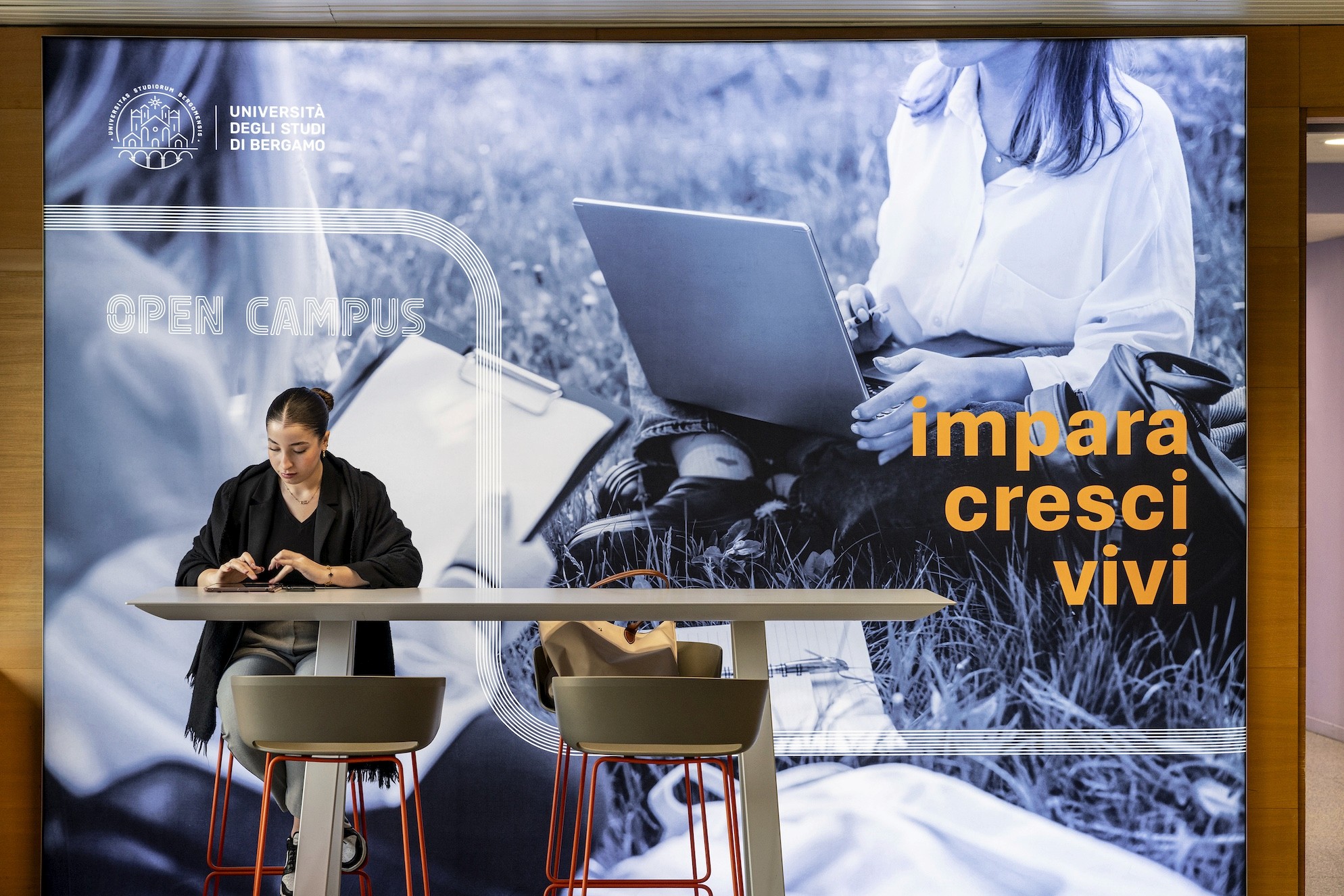
Urban campuses are structured in a clear morphological system, where environments for social interaction integrate symbiotically with academic functions, thus allowing for greater exchanges – both intentional and fortuitous – and full campus vitality. With this objective, the spaces are rethought according to principles of functionality, putting people's physical and mental well-being at the center.
The project fosters meaningful interactions for students
Urban campuses are structured in a clear morphological system, where environments for social interaction integrate symbiotically with academic functions, thus allowing for greater exchanges – both intentional and fortuitous – and full campus vitality. With this objective, the spaces are rethought according to principles of functionality, putting people's physical and mental well-being at the center.
Description
The architectural composition of places and street furniture acts as a starting point and promoter of meetings and interactions, both within the campus and towards the surrounding context, thus extending the cultural horizon beyond the physical limits of the campus itself. In this way UniBG becomes even more permeable to external stimuli and open to new opportunities. Strengthened by the architectural quality of the spaces, the participatory life of the campus also has a positive influence on the students' attitude, their results and the dynamics of integration.
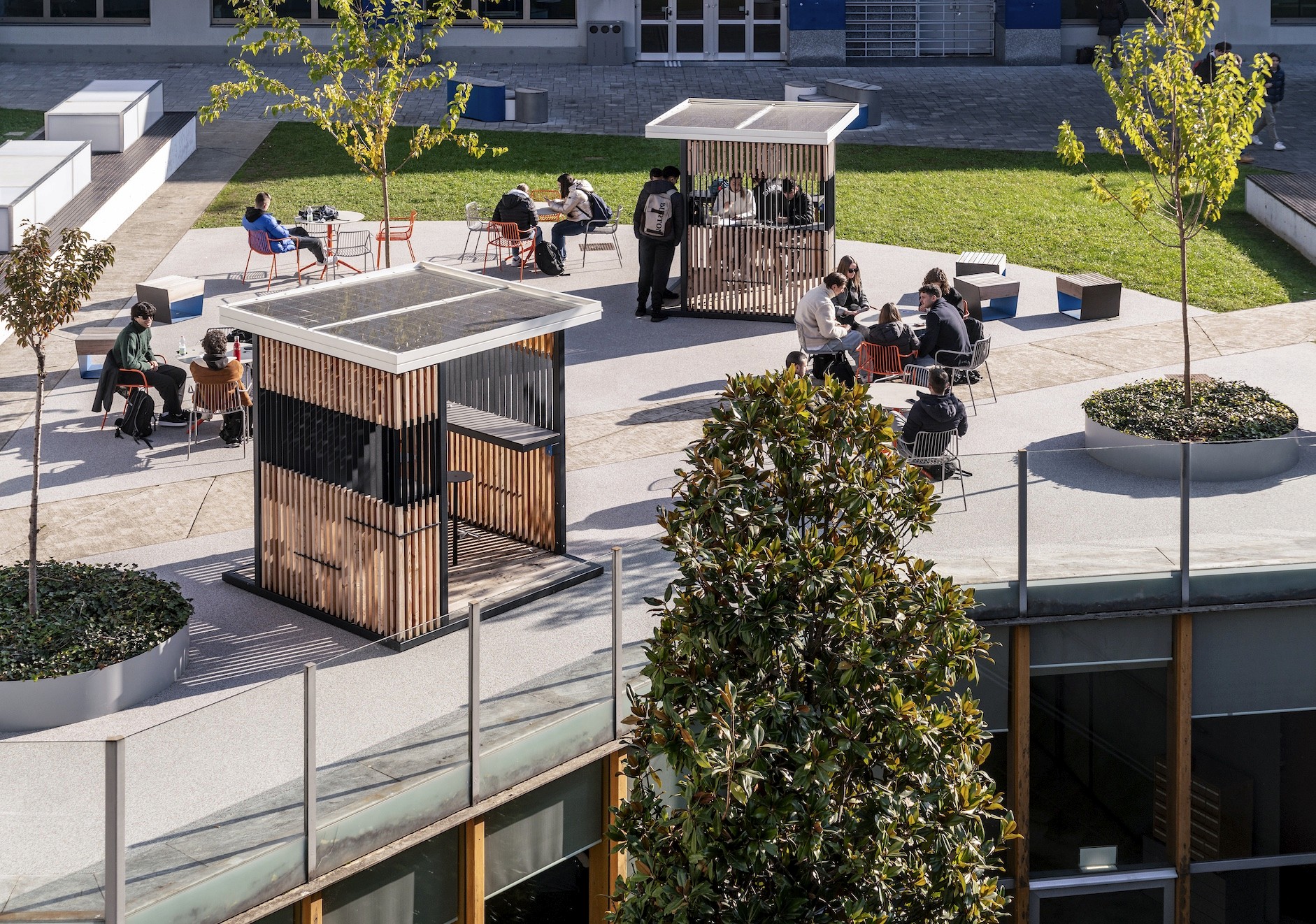
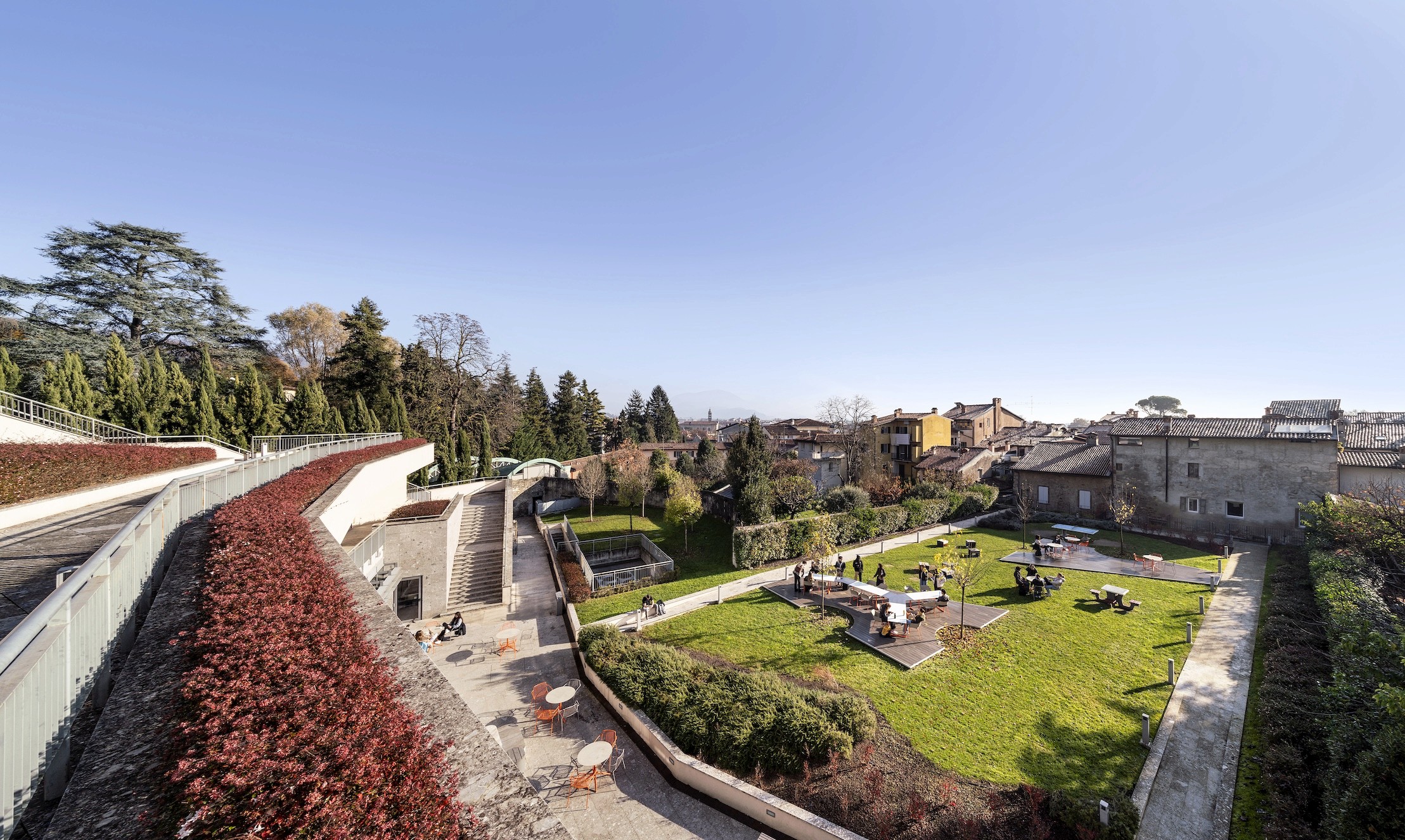
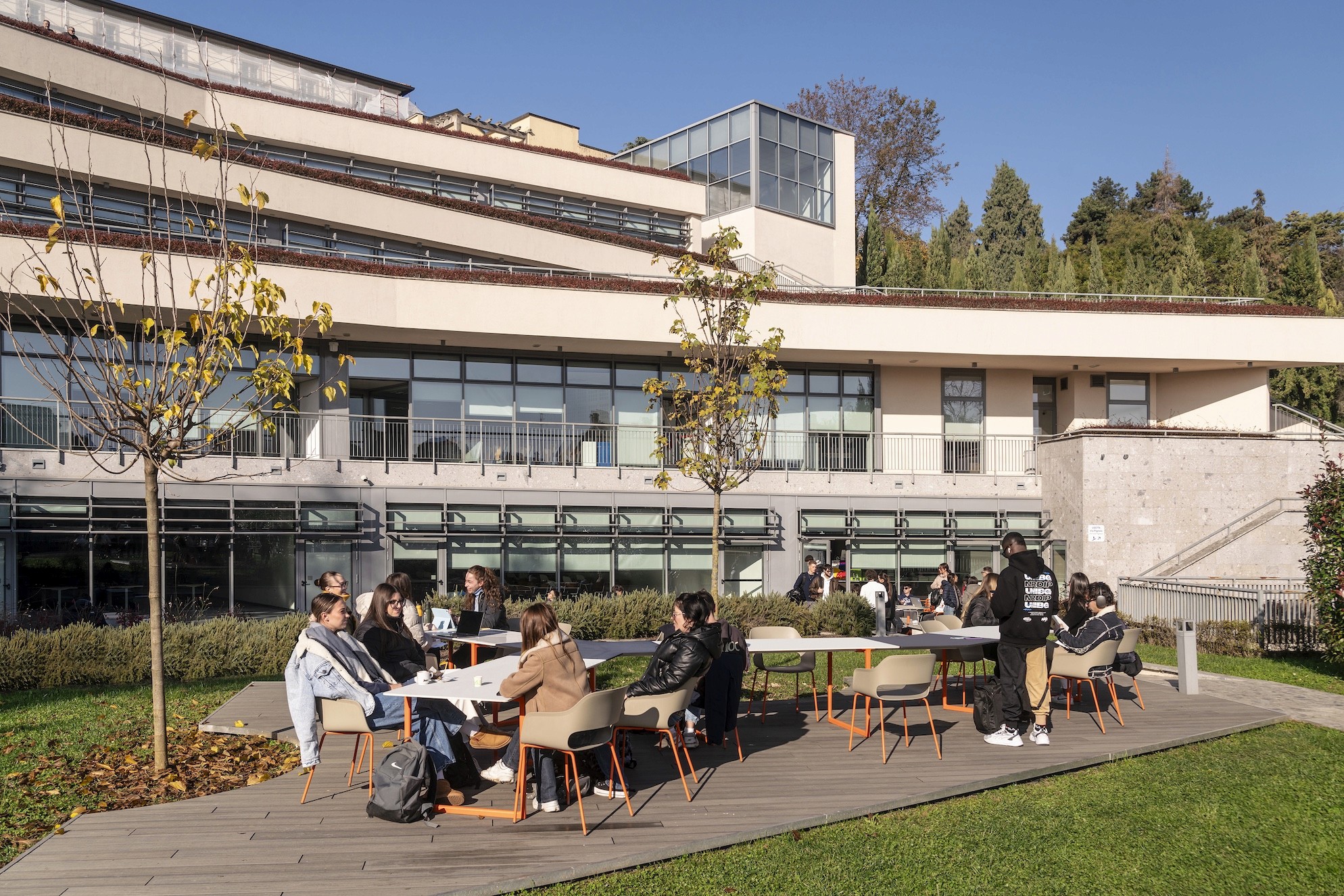
The project translates into a strategic redevelopment and refunctionalization of both the external and internal spaces of the various university locations. Outdoor places such as courtyards, terraces and gardens are rethought with the introduction of flexible street furniture, light structures (pavilions, stands, benches, etc.), greenery and trees, capable of attracting students and facilitating their interaction.
The architectural composition of places and street furniture acts as a starting point and promoter of meetings and interactions, both within the campus and towards the surrounding context, thus extending the cultural horizon beyond the physical limits of the campus itself. In this way UniBG becomes even more permeable to external stimuli and open to new opportunities. Strengthened by the architectural quality of the spaces, the participatory life of the campus also has a positive influence on the students' attitude, their results and the dynamics of integration.
The project translates into a strategic redevelopment and refunctionalization of both the external and internal spaces of the various university locations. Outdoor places such as courtyards, terraces and gardens are rethought with the introduction of flexible street furniture, light structures (pavilions, stands, benches, etc.), greenery and trees, capable of attracting students and facilitating their interaction.
Next Projects

Let's Design Together
Let's Design
Together